06.11.2026
Regenerative Tourism and the Restoration of the Indonesian Archipelago
Facing the dual pressures of climate vulnerability and historic overtourism in traditional corridors, Indonesia is pioneering a fundamental paradigm shift toward regenerative tourism.
For decades, the global gold standard for responsible travel was simple: take only memories, leave only footprints. Yet across the Indonesian archipelago, that passive ethos of sustainability is no longer sufficient. Facing the dual pressures of climate vulnerability and historic overtourism in traditional corridors, Indonesia is pioneering a fundamental paradigm shift toward regenerative tourism.
Unlike conventional eco-tourism, which focuses primarily on harm reduction, regenerative travel is net-positive by design. It actively restores degraded ecosystems, revitalizes indigenous cultural heritage, and ensures local communities serve as the primary economic beneficiaries. Backed by decisive policy mandates, ancient philosophies, and strong market fundamentals, Indonesia is turning restoration into a powerful national competitive advantage.
The Economic Engine and the Premium Pricing Model
Regenerative travel is proving to be a high-performance commercial model rather than a niche philanthropic exercise. According to the Indonesian Ministry of Tourism and Creative Economy, 43 percent of travelers are willing to pay a premium for destinations visibly committed to sustainability, while 69 percent actively seek out journeys that make tangible, measurable contributions to the local economy.
This shift has created what hospitality analysts call the green premium. Properties anchored to high-integrity social and ecological missions regularly command twenty to thirty-five percent higher rates. Today's travelers willingly absorb premium pricing when operations provide complete financial transparency, demonstrating how guest expenditures directly finance community health clinics, rural micro-loans, or wildlife ranger patrols.
Concurrently, regenerative developments are transforming operational balance sheets through utility and supply de-risking. By integrating closed-loop infrastructure, including off-grid solar microgrids, localized waste biodigesters, and rainwater harvesting, resorts insulate themselves from erratic municipal grids. Over a standard ten-year investment horizon, these decentralized systems reduce ongoing utility overhead by up to forty percent, safeguarding net operating margins against regional energy and commodity price spikes.
Hospitality investment funds are following this operational resilience, pivoting capital away from monolithic concrete builds toward modular, light-footprint asset classes:
- Boutique Luxury Glamping: Characterized by low permanent ground footprints and minimal foundation requirements, modular luxury glamping expands at a projected compound annual rate of nearly sixteen percent. These units can be deployed in months rather than years, dramatically shortening the timeline to cash-flow generation.
- Conservation-Integrated Boutique Lodges: Utilizing native bamboo, rammed earth, and low-impact architectural methods pioneered by icons like Bali's Bambu Indah, these builds achieve full capital expenditure payback within four to six years. They rely on high average daily rates and exclusive, high-margin experiential ticketing rather than dense room volume.
Macro Dynamics and Market Divergence
Data from the Indonesia Tourism Outlook underscores a profound structural divergence across the national sector. While baseline leisure travel records steady single-digit gains following international recovery, regenerative and eco-tourism behave like a high-growth technology vertical, expanding at an annual rate of 15.7 percent across the region.
General travel represents roughly 1,139 trillion Rupiah in total tourism gross domestic product, driven primarily by volume corridors from Southeast Asia and Oceania. In contrast, regenerative tourism accounts for an estimated three to five percent of domestic transactions while capturing the highest spend per traveler across the market.
While general tourism volumes remain concentrated in high-density gateways, regenerative interest is causing massive demand surges in nature-first, community-driven regions. International arrivals in Manado-Likupang surged by over sixty percent, driven by community-led marine sanctuaries and zero-plastic policies. Domestic travel to Danau Toba grew by more than one hundred percent, fueled by volcanic caldera reforestation, organic coffee agroforestry, and Batak cultural immersion. Similarly, the Lombok and Gili Tramena corridor recorded a seventy-five percent rise through clean transport loops and agrarian land preservation.
Institutional Policy and Indigenous Wisdom
Indonesia’s regenerative transformation uniquely blends centralized master-planning with centuries-old community stewardship.
At the village level, the Ministry of Tourism’s flagship Tourism Villages initiative distributes visitor spending directly into rural areas. Supported by the centralized JADESTA platform, which catalogs more than six thousand village profiles across the country, rural communities act as primary custodians of their cultural assets and micro-economies.
At the national level, the government has established three dedicated Regenerative Tourism Destinations to redirect travel flows into net-positive frameworks:
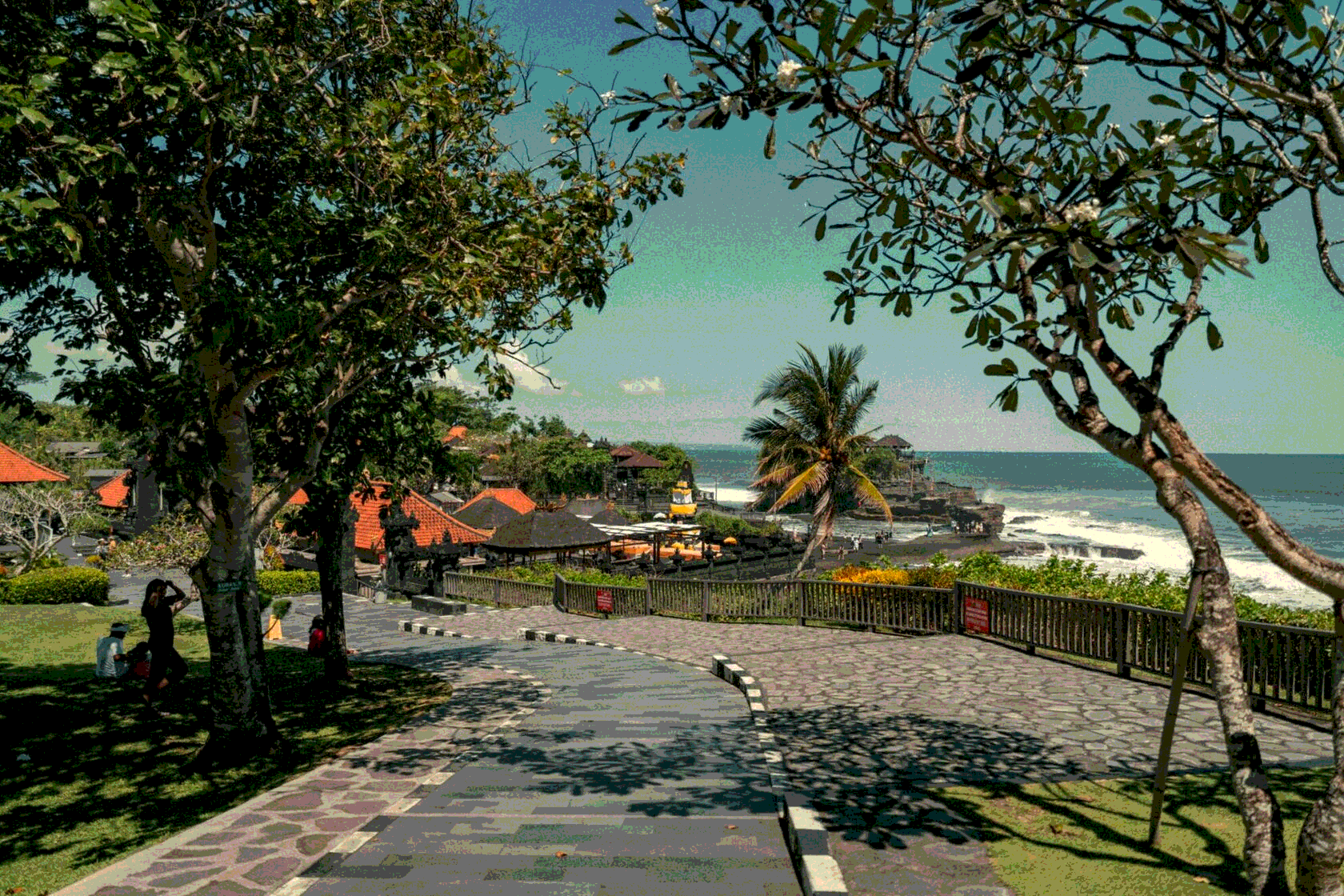
- Bali: Serves as the cultural and ecological blueprint, re-anchoring hospitality to the Balinese philosophy of Tri Hita Karana, which emphasizes harmony among humans, nature, and the spiritual realm. New hospitality guidelines prioritize agricultural supply integration, water-table recharge projects, and equitable local wealth distribution.
- Greater Jakarta: Represents urban regenerative travel, proving that restoration extends beyond rural jungles. Key priorities include retrofitting heritage landmarks across Kota Tua, expanding resource-efficient business venues, and integrating corporate event travel with mangrove planting and river basin rehabilitation.
- Kepulauan Riau: Acts as the blue economy hub along international shipping lanes, capturing high-end yachting and coastal travel. The model mandates that luxury maritime resorts directly subsidize surrounding marine protected areas, localized clean energy grids, and traditional open-ocean fishing reserves.

Remote Frontiers as Engines of Survival
The ethical core of regenerative travel is most evident in Indonesia’s most remote frontiers, where responsible travel revenue serves as a vital funding stream for ecological defense.
In Raja Ampat, community homestay associations and locally owned micro-resorts leverage guest conservation fees to fund maritime patrols. Former dynamite fishermen are employed as reef guardians, utilizing aerial and aquatic drones to deter illegal trawlers. As a direct result, shark and manta ray populations have rebounded to some of the highest densities recorded in the Indo-Pacific.
In the peat swamps of Tanjung Puting National Park in Central Kalimantan, traditional riverboat expeditions supply the resources needed to protect endangered ecosystems. Tour earnings fund the acquisition and systematic reforestation of degraded land bordering the reserve, reconnecting fragmented jungle canopies so wild orangutan and proboscis monkey populations can safely migrate and thrive.
By uniting sound investment economics, proactive governance, and grassroots stewardship, Indonesia is setting a new benchmark for global hospitality—one where travel actively heals the places it touches.